Cursive handwriting can often be hard to interpret. Reading Agreements and Logbooks comes with practice: there is no other practical way of recognizing the letters than frequent reading, and even then different masters have different writing styles. But here are a few tips and tricks to help you read the documents.
1. Some masters were still using the stylized "s" which is an "s" stretched out until it resembles a cursive "f".
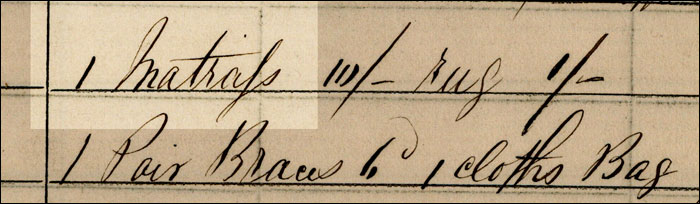
2. Where you have recognized a whole word, concentrating on the individual letters and comparing them with letters in words still to be deciphered, may help.
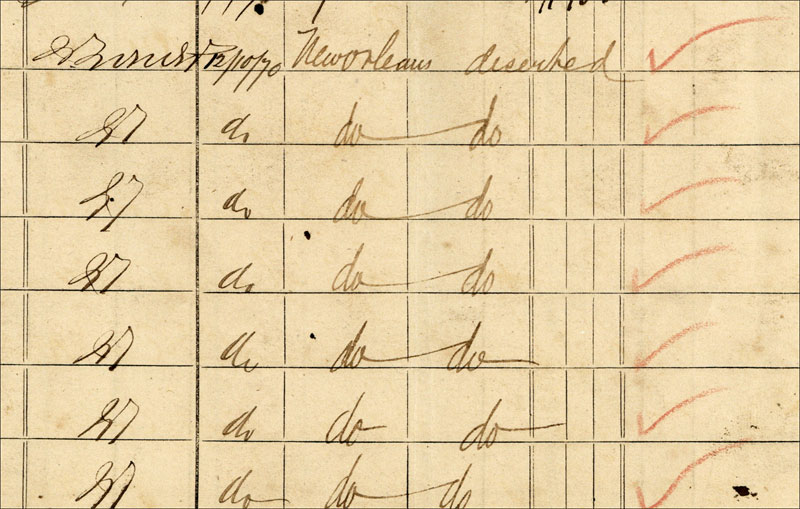
3. Ditto, otherwise abbreviated to "do" or "〃" is a common abbreviation throughout the lists of crew agreements. It means "as above" and was used instead of repeating the same information.
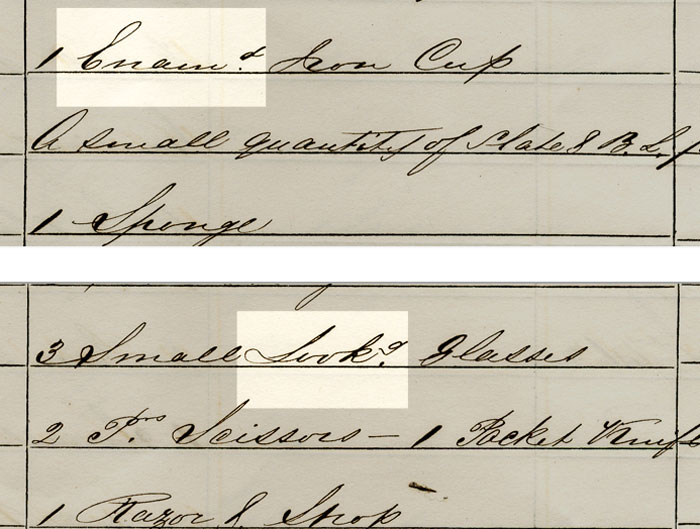
4. Often masters will use superscript abbreviations, such as Jany. This works by dropping all the remaining letters but superscripting the final.
5. If all else fails, websites like Google can be helpful. Write what you think the word is and see what is suggested.
