| Lascars Introduction |
| Parliamentary Committee (1902-3) |
| Other Seafarers, Other Histories |
| Remainder of Crew |
| A Last Word on "Lascars" |
| Lascars Occupations Glossary |
| Lascars Selected Sources |
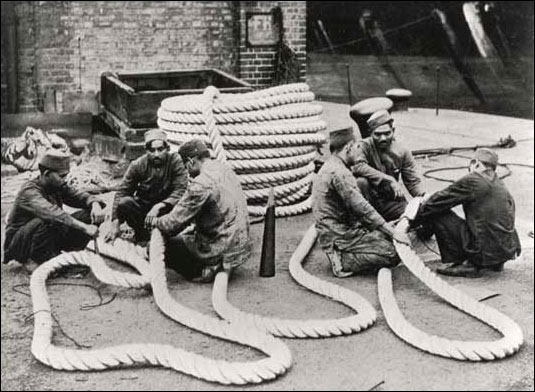
The Indian "Lascar Act" of 1832 was repealed only in 1963, having outlasted the time that Lascar was used as a term in British labour legislation (Wemyss 2009, 151). In 1940, in the period of decolonization, Labour minister Ernest Bevin protested the term with passion [he], "would not allow them to be called Lascars any more. They are Indian seamen, and when you get rid of the term Lascar, you will rid of the conception that they are cheap human fodder (cited in Barnes 1983, 39)." It was 1953, however, before sensitivities to the differentiation of "Indian seamen" by race prevailed and they became "Seaman Class I and Class II". Today India is second only to the Philippines in the numbers of seafarers it supplies to the world’s merchant shipping. A trade union organization, the International Transport Workers’ Federation, is perhaps the most effective institution operating globally in an industry which still exploits racial difference.
